

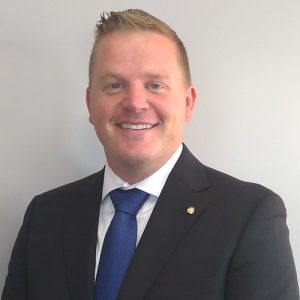


As a teenager standing under the bright lights of my hometown football games in Albany, Missouri, I learned the meaning and value of teamwork. That lesson stuck with me. After high school, it was reinforced during high-stress training at the Missouri State Highway Patrol Academy, where I trained to become a trooper.
But in the corporate world — especially in banking — why isn’t teamwork more prevalent?
I get it: Banks must compete with other financial institutions for loan and deposit customers. That’s how we keep the lights on and the doors open. But what we face daily is bigger than any one bank. It’s something that impacts the entire industry, regardless of size, assets or location.
That thing I’m talking about? You guessed it — fraud.
Community banks are feeling the sting of fraud most acutely because every dollar lost to fraud can have a direct impact on our bottom line. While larger banks may absorb those losses more easily, for us, they’re not just drops in the bucket — they’re waves.
To me, it doesn’t matter who your customers are or where you’re located. You could be across the street from a BTC Bank branch or in another state entirely. What matters is that your customers are being affected by fraud, and I care about that. So why can’t we work together?
Earlier this year, I pitched the idea of forming a fraud committee to Matthew Ruge, executive director of MIBA. The concept was simple: Any bank could join at no cost, creating a space for us to connect and collaborate to slow the spread of fraud. Matthew saw the value immediately and gave me the green light.
Fast forward a few months — I was in Des Moines speaking with Michael Gathman, CEO of Community Bankers of Iowa, and shared what we were starting in Missouri. Michael was eager to join the effort and has been instrumental in helping to expand it. I’m now seeing firsthand the power of teamwork between banks and state associations.
Let me explain how the committee works.
Michelle Lawson, who manages our member roster and email communications, has played a key role in organizing the Financial Fraud Advisory Committee. We meet virtually every two months for one hour. About six weeks before each meeting, I reach out to the group to gather topics they’re interested in discussing. Based on that input, we invite a speaker to address those issues, usually for 20-30 minutes. The second half of the meeting is an open forum. Engagement has been better than I imagined; the conversations fill the entire hour, with nearly everyone participating.
We all know community bankers wear many hats. Our group includes a wide range of titles, but we share a common goal: helping each other fight fraud.
Another valuable resource the committee offers is real-time advice. If your bank is seeing something suspicious and you want to know if others have seen it too, you have a platform to ask. Or if you’re exploring new tools or software, you can get peer feedback before making a decision.
Don’t just take my word for it — here’s what some of our members have to say:
“The battle against fraud is ongoing. While the risk and market areas may be different, collaborating with our peers and industry professionals about fraud trends and mitigation techniques allows us to gain insight we can’t get by fighting these battles alone. Everyone brings a unique perspective — and sometimes that’s just the edge you need to stop the fraud.”
— Peggy Lottmann, Farmers & Merchants Bank
“Fraud is not static. Being part of a Fraud Committee with other bankers in my state allows us to share not only trends we’re seeing in different regions, but also resources and tips that help mitigate both customer and bank losses.”
— Peggy Alexander, FCNB Bank
“Fighting fraud is bigger than just one person or one financial institution. It’s amazing to see a group of community bankers come together with a common goal of fighting fraud and educating ourselves and our customers.”
— Kim Kohlbusch, Citizens Bank
“Being on the fraud committee has been not only informative, but helpful. It has shown that most banks combat the same fraud issues. I believe forming this committee was a positive step towards assisting banks in the fight against fraud.”
— Christina Boyd, Community State Bank of Missouri
If you’d like to join or learn more about the Financial Fraud Advisory Committee, please reach out to me at quentin.mcconkey@btcbank.bank.