


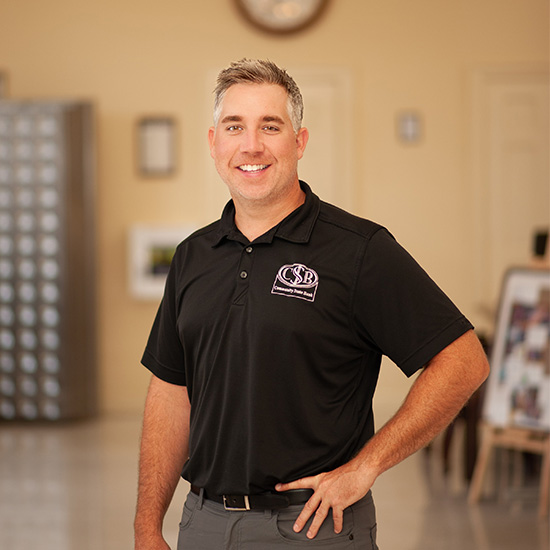

For Kyle Scherder, community banking is more than a career — it’s a way to serve the place that shaped him. Born and raised in Bowling Green, Missouri, Scherder never imagined he would one day return home to build both his professional and family life in the same small town where he grew up. Today, as vice president of Community State Bank of Missouri, he can’t imagine being anywhere else.
His story is grounded in relationships, hard work and a deep appreciation for community values. Though his path to banking wasn’t exactly what he first envisioned, it ultimately proved to be the perfect fit.
“I really enjoy getting to work with people,” Scherder said. “In a small community, you know your customers. You’re helping them make some of the most important financial decisions of their lives.”
That personal connection is what continues to drive him more than a decade into his career at Community State Bank.
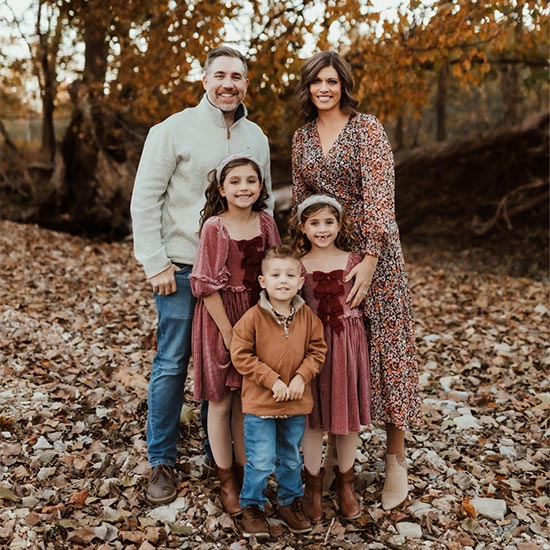
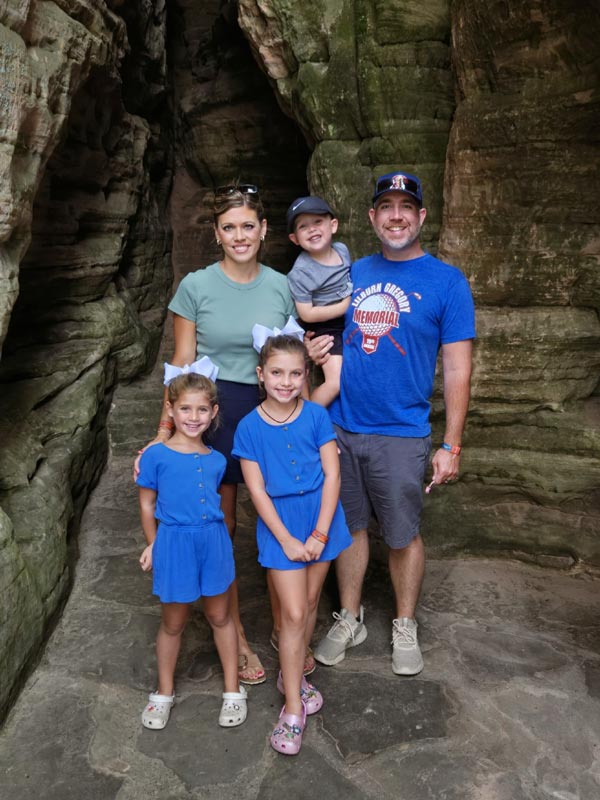
Scherder’s roots in Bowling Green run deep. Now, he and his wife, Olivia, are raising their own family there, balancing busy careers and an active household with their three children — Sally, Hattie and Gregory — and their dog, Lucy. Olivia works as a nurse at Hannibal Regional Hospital, and together they’ve embraced the rhythms of small-town life that shaped Scherder’s upbringing.
An Unexpected Path to Banking
Like many who grow up in close-knit communities, Scherder once thought his future lay elsewhere. After graduating from Bowling Green High School, he attended the University of Missouri-Columbia and earned a bachelor’s degree in business administration with an emphasis in finance. At the time, though, his plan was to follow in his family’s footsteps.
“My entire life, I wanted to go to Mizzou and become a tax accountant like my mother,” Scherder explained. “My grandfather owned his own practice in Bowling Green, and a lot of my family went through the Mizzou School of Accountancy.”
When he wasn’t admitted into the accounting program, however, his path shifted — unexpectedly, but ultimately for the better. While in college, Scherder had taken a part-time job as a teller at Landmark Bank. What started as a practical way to earn extra income quickly grew into something more meaningful.
“Looking back, I don’t know if I would have been a very good tax accountant,” he said with a laugh. “I really enjoyed being on the front line of the bank and talking to people.”
Although banking became his long-term direction, Scherder’s accounting background still proved valuable. After college, he spent three and a half years as an auditor with Williams-Keepers LLC, a regional public accounting firm in Columbia, before returning to Landmark Bank in an internal audit role.
Not long after, an opportunity emerged at Community State Bank of Missouri — just as he and Olivia were preparing for marriage and thinking seriously about the future they wanted to build.
“At that stage of my life, I didn’t know if I wanted to be back in small-town Missouri,” Scherder admitted. “But now, raising a family here, I wouldn’t want it any other way.”
More than 10 years later, he remains confident it was the right decision.
Wearing Many Hats
In his role as vice president, Scherder embodies the versatility required in community banking. He spends much of his time in lending, working with customers on home, agricultural and commercial loans, while also leading the bank’s Asset Liability Committee (ALCO), overseeing balance sheet management and managing the institution’s securities portfolio.
“We’re a small community bank, so I wear several hats,” he said. “Every day is different. You really don’t know what your day is going to look like, and I enjoy that.”
That variety is one of the aspects he values most, allowing him to combine analytical expertise with the relationship-focused side of banking. It’s also helped him grow into a leadership role while staying closely connected to both customers and colleagues.
For Scherder, community involvement is simply part of being a community banker. He serves on the Bowling Green R-1 School District Education Foundation and is treasurer of the local Chamber of Commerce. He and his family are also active in their church, and Community State Bank regularly supports many local charitable organizations and foundations.
Still, some of his most meaningful community involvement happens in a more personal setting — on the softball field and on the basketball court.
A lifelong sports fan and devoted Mizzou Tigers supporter, Scherder spends his free time coaching youth softball and basketball, currently leading both a 10U and 8U softball team for his daughters. “I was fortunate that my parents were involved when I was growing up,” he said. “I think it’s important to be involved in stuff like that.”
Though coaching leaves less time for hobbies like golf, he considers the trade-off well worth it.
Lessons Learned
Throughout his career, Scherder has also been shaped by mentorship, particularly from Community State Bank CEO Paul Hill and former co-CEO Mark Gooden. From Gooden, he learned the importance of listening — a skill that doesn’t always come naturally to someone who thrives on interaction.
“He always emphasized taking time to listen — whether it’s a customer, coworker or someone who works under you,” Scherder said. “Hear what they’re saying process it and then respond.”
From Hill, he gained a deeper appreciation for the power of relationships. “He’s always emphasized creating strong relationships with customers, coworkers and peers within the industry,” he said. “When people trust you, you’re able to help them on a deeper level.”
These lessons now define Scherder’s own leadership approach, one grounded in connection, attentiveness and trust.
When asked what advice he would give to someone considering a career in banking, Scherder’s answer comes quickly: build relationships, set goals and maintain a positive attitude.
“Networking and building strong relationships are foundational,” he said. “That applies no matter what industry you’re in.”
He also encourages young professionals to remain open to opportunities and work hard when those opportunities arise. “I think a lot of success comes from being goal-oriented and not passing up opportunities,” he said.
Above all, attitude matters. “You can teach people how to be a banker,” Scherder said. “But attitude is huge.” He laughs that coworkers sometimes tease him for being overly optimistic, but he believes that positivity plays a critical role in both individual success and workplace culture.
Looking Ahead
Like many in the industry, Scherder is also keenly aware of the challenges facing community banks. Regulatory burdens remain a concern, particularly when rules designed for large institutions are applied broadly to smaller ones.
“There’s often a broad brush applied to community banks,” he said. “The implementation doesn’t always fit institutions of our size.”
Attracting and retaining talented employees — especially in rural areas — is another ongoing challenge, as is staying ahead of cybersecurity risks and increasingly sophisticated fraud schemes. Banks are investing heavily in technology and tools to protect customers, but education remains just as important.
“Customers want to know their information and finances are safe,” Scherder said. “We also want them to understand how we communicate so they can recognize when something isn’t right.”
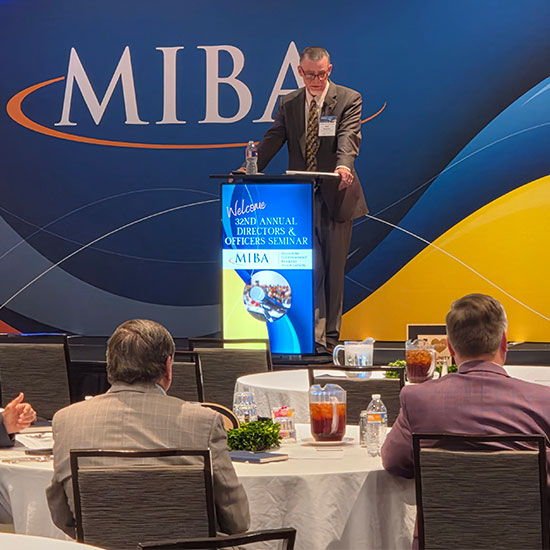
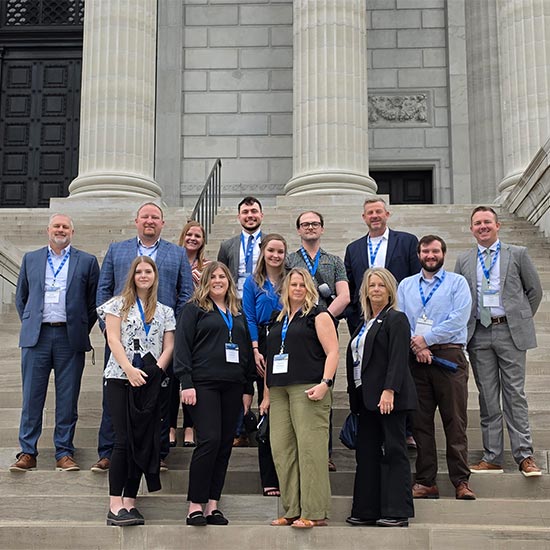
Community State Bank of Missouri has long been involved with the Missouri Independent Bankers Association (MIBA), including through CEO Paul Hill’s service as a past president. Scherder himself has become increasingly active with the association over the past several years and currently serves on the board of directors.
The association’s advocacy, education and networking opportunities are vital resources for community banks navigating an increasingly complex landscape.
“There’s a lot to keep up with in banking,” he said. “MIBA helps keep us current on what’s happening across the industry.” He also appreciates the opportunity to connect with peers. “You can bounce ideas off others, ask questions and learn how they’re handling challenges. That camaraderie is really valuable.”
For Scherder, banking always comes back to people — customers, coworkers, mentors and neighbors. And in Bowling Green, that sense of connection continues to affirm what he’s come to know over the years: Community banking isn’t just where he works. It’s where he belongs.