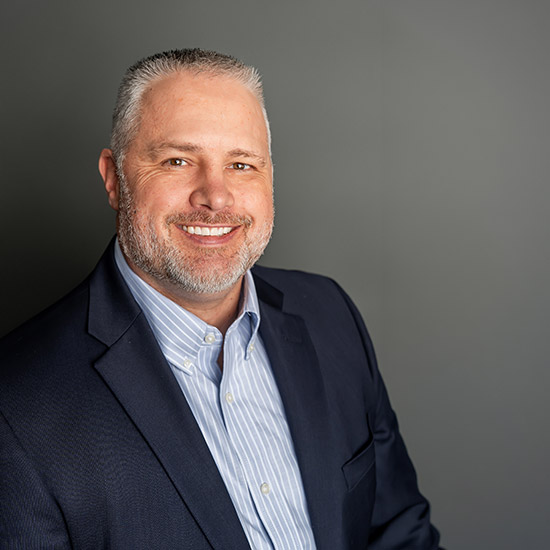



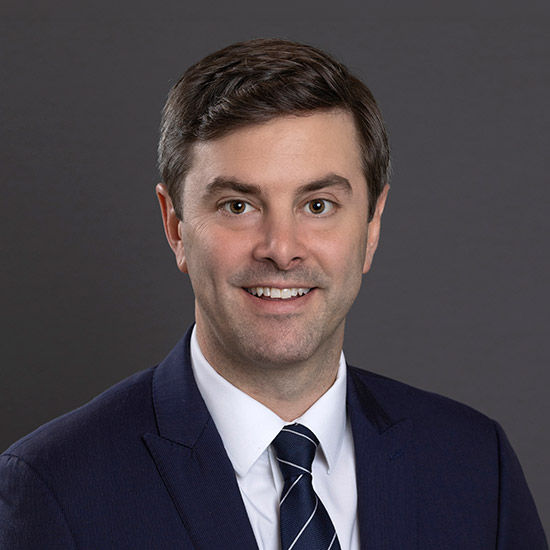

Some careers begin with a carefully planned interview. A.W. Spellmeyer’s began with a poker game.
While attending a Christmas party shortly after graduating with an economics degree, A.W. found himself sitting across the poker table from Jim Lanigan, one of his father’s fraternity brothers and a leader at what was then First St. Louis Securities, now known as First Bankers’ Banc Securities (FBBS). A.W. had interviewed for a position at the brokerage just weeks earlier without much success. But after taking James’ money during the card game, he earned something far more valuable — a second look.
That unexpected opportunity led him to join the company in July 2004. More than two decades later, the one-time bond trader now serves as president and CEO of FBBS. Under A.W.’s leadership, the company has grown into one of the nation’s premier fixed-income partners for community banks. Throughout the journey, A.W. has remained grounded in the culture that first attracted him to the organization — one built on integrity, relationships and putting community banks first.
We sat down with A.W. to discuss his career, the evolution of FBBS and how the company is helping community banks navigate today’s rapidly changing financial landscape. The following are excerpts from our conversation.
Please tell us a bit about what you do at FBBS.
Every day is a little different, and that’s one of the things I enjoy most.
At a high level, I’m responsible for setting the strategic direction of the company, but because we’re still relatively small, I get involved in just about everything. That includes sales, trading, compliance, personnel, customer relationships and evaluating new technology. We oversee an investment portfolio accounting platform for a large number of institutions, so we’re constantly reviewing our data, improving our platforms and making sure we’re providing the best tools possible for our clients.
I also spend a lot of time traveling to banking associations and visiting customers. Since we’re owned by multiple bankers’ banks, I’m on the road quite a bit. And if one of our traders is out, I still get to jump back into trading bonds, which is honestly still my favorite part of the job.
People ask what a typical day looks like, and the answer is that there really isn’t one. If something needs attention, whether it’s strategy, operations or helping a client solve a problem, I’m involved.
What has been the most rewarding part of your career so far?
Without question, it’s seeing other people succeed. Whether it’s someone here at FBBS that we’ve hired and helped develop or someone at one of the community banks we work with, watching people grow professionally is incredibly rewarding. I used to teach at banking schools, and now I’ll run into people who started as first-year students, and they’re leading departments or running banks today. Seeing that progression is really satisfying.
As CEO, there’s another aspect that has become meaningful to me that I probably didn’t fully appreciate before. We have more than 30 employees here, and I am ultimately responsible for them — their mortgages, their kids’ college tuition, their families — and I don’t take that lightly. Until you sit in this chair, you don’t fully understand what it means to have that many people depending on you. You don’t want to let them down. Being able to provide opportunities for people and watch them build successful careers has easily been the most rewarding part of my job.
How has FBBS changed since you started working there in 2004?
When I started, we were independently owned by a handful of partners. That changed when the company became part of the bankers’ bank ownership group, and that’s probably been the biggest corporate change we’ve experienced.
Beyond that, the business itself has evolved dramatically. Twenty years ago, fixed-income brokerage was much more straightforward. Banks bought bonds, sold bonds and that was largely the conversation.
Today, if you’re going to compete, you have to bring a complete toolbox.
Community banks expect much more from their partners. Along with brokerage services, they need bond accounting, asset/liability management tools, interest rate risk modeling, scenario analysis, balance sheet strategies and sophisticated analytics. They want to know not only what’s happening today, but what could happen tomorrow under multiple scenarios.
Technology has become just as important as relationships. Relationships still open the door, but the data, software and analytics have to back it up.
Ultimately, our success depends on the success of the banks we serve. If they’re not successful, we’re not successful. That mindset has pushed us to continue expanding our capabilities and finding new ways to help banks compete.

What sets FBBS apart from competitors?
It starts with who owns us. We’re owned by bankers’ banks, and those bankers’ banks are owned by community banks. That creates a completely different perspective than most firms in our industry. The people serving on our board are presidents of bankers’ banks and leaders of community banks. Everything we do ultimately flows back to helping community banks succeed.
I also think our size works to our advantage. We’re large enough to provide the same sophisticated services offered by much bigger firms, but we’re still small enough to be incredibly responsive. If a customer needs something, we’ll jump on a plane, hop on a call or build a solution if one doesn’t already exist.
We’re not interested in telling customers why something can’t be done. We’d rather figure out how to make it happen. If one bank needs a new tool, chances are another bank will benefit from it too. That’s how many of our solutions have been developed over the years.
We also take being good stewards seriously. Every dollar we spend ultimately belongs to our owners, and their owners are community banks. That creates a level of accountability that’s hard to replicate elsewhere.
At the end of the day, we want to do things the right way, be responsive and deliver results.
How can FBBS help banks manage the ever-changing pressures of today’s market?
Community banks are facing challenges from every direction — changing regulations, interest rate volatility, liquidity concerns, technology and now AI.
One advantage we have is that we’re connected to community banks across the country. We hear what’s happening during examinations, what regulators are emphasizing and where banks are finding success. That gives us a broad perspective that we can share with clients.
We’ve continued investing heavily in our technology as well. Today, we can provide sophisticated investment analyses, interest rate risk modeling, municipal credit reviews, balance sheet strategies and bond accounting. We also expanded into funding services by adding an in-house brokered funding desk, allowing us to help banks manage both sides of the balance sheet.
We’ve also introduced loan purchasing capabilities, giving banks additional flexibility as market conditions change.
Our goal has always been to become a true solutions partner. When a banker calls us with a challenge, we want our first answer to be, “Yes, we can help.” If we don’t already have the answer, we’ll find it. Between our team and our relationships with regulators, bankers’ banks, state banking commissioners and community bankers throughout our network, chances are someone has encountered that challenge before. That’s one of the biggest advantages of being deeply rooted in the community banking industry.
Is there anything exciting on the horizon for FBBS that you’d like readers to know about?
One area we’re investing heavily in is artificial intelligence. Like everyone else, we recognized that AI was changing rapidly and decided to embrace it early. We evaluated multiple AI platforms and have spent the past year testing, refining and building practical applications into our business.
The key is using AI responsibly. We don’t view it as replacing people. We view it as making talented people even more effective. With the proper guardrails in place, AI allows our analysts to process enormous amounts of data more efficiently, freeing them to focus on higher-value work.
We’ve also developed our own internal platform by integrating years of customer data, CRM information, reporting tools and portfolio analytics into a single system. That allows our team to create custom peer groups, generate reports, analyze customer relationships and identify trends much faster than before.
Looking ahead, we’re expanding those capabilities even further. Our goal is to use AI to leverage historical market data, gather call report information and analyze economic indicators to identify opportunities that may help community banks make better investment decisions. It’s another tool — not a replacement for experience — that can provide valuable insights when combined with knowledgeable professionals.
Any final thoughts?
The longer I’ve been involved with community banking, the more I’ve come to appreciate organizations like MIBA. Early in my career, I didn’t fully appreciate everything associations do behind the scenes. Today, I see just how important they are.
They advocate for community banks and provide education, leadership development and, maybe most importantly, opportunities for bankers to connect with one another.
Community banking has always been built on relationships. Bankers may compete in the marketplace, but they’re also colleagues who share ideas, learn from one another and work together to strengthen the industry. That collaboration is one of the things that makes community banking unique. At FBBS, we feel closely aligned with that same mindset because of who owns us and who we serve.
And if I were going to leave readers with one piece of advice, it would simply be this: Try to outwork everybody, and you’ll usually end up just fine.